
Five years ago, in my blog post entitled InCREDible Rise Of CRED, I predicted that targeted ads would eventually be the business model of CRED. My prediction has aged well, with ad tech major Meta taking a 25% stake in the startup for $900 million in what’s widely regarded as the first step towards acquiring a majority stake in CRED in due course.
While CRED’s founder Kunal Shah – who also moves to Meta as CEO of WhatsApp with this deal – has tweeted that Meta will not get access to CRED’s customer data, we’ve seen in Your Personal Data Is Not Sold, Just Used how advertisers can run ads without getting access to customer data.
Another possibility is that Meta gives its advertisers access to CRED and CRED runs targeted offers to its users on their behalf. For reasons that will become clear in a bit, I call this Privilege Marketing.
 India’s GDP is around $4 trillion. Let’s assume that 50% of that is consumption i.e. $2T. Let’s further assume that consumption is unequal across the population of 1.4 billion and posit that half of that – $1T – comes from high earners (see footnote 1).
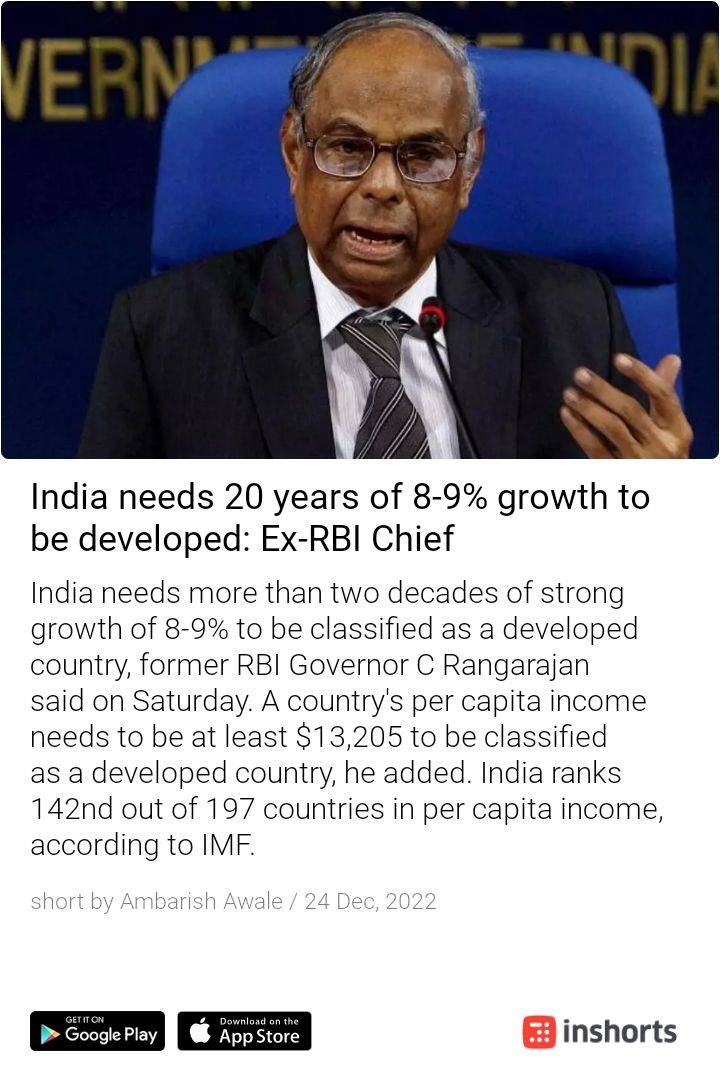
According to former RBI Governor, Dr. C Rangarajan, a country’s per capita income needs to be $13,205 for it to be classified as a developed country.
If we divide the $1T consumption by $13205, we arrive at close to 76M (see footnote 2).
This suggests that India has a market of over 75 million people with developed world income. That’d make the country the fourth largest such market in the world, after USA, Japan and China.
While doing a fact-check of the above numbers, ChatGPT confirmed “This makes India one of the world’s largest premium-consumption markets despite its relatively low average income.”
Chat also averred that many luxury, premium smartphone, airline, automobile, and organized retail companies effectively operate on a version of this thesis: India’s average income is low, but its affluent consumer base is enormous in absolute numbers.
Premium brands have been selling to this affluent consumer base via marketing tactics like Experiential Marketing. Carried out directly or jointly with Private Wealth Management and Private Banking divisions of leading banks, Experiential Marketing creates and engages target groups of affluent consumers across different demographics and psychographics by offering exclusive privileges and experiences like coveted IPL tickets, invitation-only wine tastings, celebrity interactions.
But these campaigns have been sporadic and few-and-far between.
According to me, CRED + Meta is the first platform that enables brands to target this affluent consumer base at scale aka Privilege Marketing. It derives its Privilege Marketing chops from
- CRED’s exclusive base of credit card holders with 750+ CIBIL credit score, the cohort of the most affluent consumers in India, and
- Meta’s extensive roster of advertisers.
To give an example of the type of Privilege Marketing that could be done on the combined platform:
Consider a CRED customer who has many wine store charges on their credit card. CRED can invite him or her to an exclusive wine-tasting of a premium wine brand, hosted by a renowned sommelier, and available only to a select group of CRED members.
It’s still early days of the partnership, so let’s see how my prediction that it will take performance marketing to new heights ages.
I’ve noticed one thing about CRED. Even by the usual standards of Sour Grapes Feeling in India, the company has far too many detractors who just cannot accept its blockbuster success and perpetually keep throwing shade at it.
Let me take the top three areas around which CRED faces constant criticism.
1. Scam
The average Indian (herewith J6P for Joe Six Pack or Jane Six Pack) calls CRED’s founder Kunal Shah a scammer because he sold his previous startup Freecharge to SnapDeal for $400 million but SnapDeal could get only $40 million for it when it sold it later to Axis Bank.
This is total BS. A company’s founder is only responsible for what he does while he’s still running the company. $400M was an awesome exit. What happens to it after he sells it to somebody else is not his / her problem.
2. Fluke
Many people say they don’t know CRED’s business model and insinuate that CRED’s success is a fluke. Take, for example, Jaspreet Bindra, author of the MSM op-ed entitled WhatsApp ki Khatir, Kunal:
For years, nobody could quite understand Cred’s business model. Now, in a joke going around the internet, Meta’s investment of $900 mn in Cred is being attributed to Mark Zuckerberg finally realising that the only way to understand the Indian fintech’s business model was to buy a large enough piece of it.
Lame joke!
I speculated about CRED’s business model six years ago, so anyone with a basic exposure to CRED’s offering – credit card bill payment – should’ve been able to predict it (or at least understand it after somebody else had described it).
But, on second thoughts, in a country of 1.4 billion population, there are only 120 million credit cards. Besides, as noted earlier, CRED targets only 750+ CIBIL people, of which there are only 12 million, which is less than 1% of the country’s population.
At the risk of making a politically incorrect statement, CRED is a super-elite product, so it should not come as such a surprise that a majority of the country’s population does not understand the firm’s business model.
When you solve a BMW owner’s pain area, ignore what a bullock cart user thinks about your solution. #CRED
— SKR (@s_ketharaman) August 1, 2026
But that’s a reflection of the majority of the population, not of CRED.
3. Colonizer
The author of the aforementioned article draws a parallel between CRED + Meta and the British Raj.
In the old colonial model, raw cotton left India, was processed in Manchester, and came back as expensive cloth. In new data colonialism, Indian conversations, transactions and consumer behaviour may train, refine and enrich global AI and commerce systems, while most of the economic value accrues elsewhere.
This is a ridiculous critique that I’ll immediately file under “Indians constantly whine” department.
When India exports finished goods, Indians whine that they’re dependent on foreign power for raw material, foreign power is colonizing us, etc.
When India exports raw material and labor, Indians whine that foreign powers capture the bulk of the value from the finished goods, etc.
But when China exports rare earth elements to the whole world, Indians say that China has a chokehold on the whole world.
Why don’t we say India has a chokehold on the world when all the apps in the world are apparently built using the data that India has exported to the whole world?
I can guess why. It’s because of another thing that Indians are well-known for: “Crab in the Bucket Syndrome”.
CRED is a great example of a startup that has navigated through tremendous amount of skepticism and gone on to become one of the most successful startups of India. It also proves that a startup founder doesn’t need to win popularity contests to become a rockstar.
FOOTNOTES:
- This is indeed true for USA where 50% of consumption is driven by Top 10% of earners.
- $13,205 comes very close to income tax exemption limit of ₹12 lakhs ~ $12,631. While we can keep questioning what Indian citizens get in return for paying income tax, it cannot be denied that the income tax exemption is inordinately high in relation to India’s per capita income ($2,700), thereby leading to a situation where only a tiny fraction of the country’s population files income tax returns.