In my first IT job, I used to sell servers, personal computers, printers, and other hardware equipment to the SMB market. My territory included the textile market in the Kalbadevi district of the then Bombay.
One of my prospective customers was a yarn merchant. In between our discussions about the features of my company’s PC, he let it slip that he owned a penthouse in Warden Road, which was the priciest real estate market in India at the time – and even now (see footnote 1). If that was meant to assure me that budget was not a constraint, it worked.
After satisfying himself with the technical details of my product, he moved to price. He boasted that he got 0.5% discount on his last PC purchase but warned me that that wouldn’t suffice this time.
I was perplexed. Discounting the list price by up to 10% was a standard industry practice and also permitted by my company’s policy. While I could’ve easily given him 10% discount and closed the deal, it struck me that, in the yarn trading business, margins were wafer thin and even a 0.5% discount was a lot of money.
I told him I could go up to 0.75%. He balked at that and demanded 1%. I asked, only half-jokingly, why someone who owned a penthouse on Warden Road was bargaining so fiercely over a quarter percentage point – implying that, at his paygrade, the difference between 0.75% and 1% ought to be immaterial.
He said something that has stayed with me forever: “It’s only by negotiating like this that I could buy a penthouse in Warden Road”.
This was my first encounter with Nickel-and-Diming.
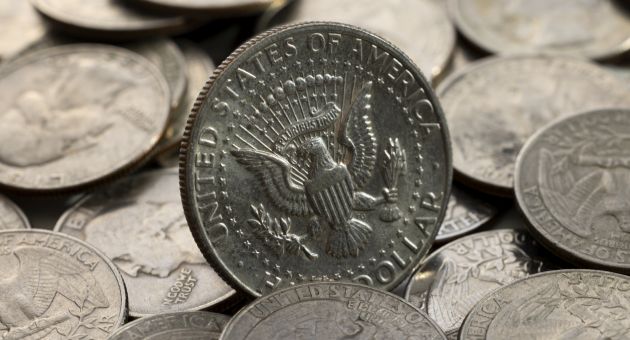
During the next 40 years, I’ve come across many more examples of this practice.
Back in the day, nickel-and-diming happened only in trading firms and so-called lala companies. For the uninitiated, a “Lala company” is an informal term used in the Indian corporate world to describe a traditional, family-run business that is owner-driven rather than professionally managed.
But the practice has now spread to large MNCs and entered the playbook of billionaires and oligarchs.
Let’s see a few modern world examples of nickel-and-diming.
1. Uber Cancelation Charges
Uber fines the rider even when the driver cancels. Very few riders jump through the hoops required to claim the measly refund. As a result, the rideshare major worth $250 billion pockets the 50 cents cancellation charge.
2. Jeff Bezos Legal Fees
Michael Sanchez, the brother of Jeff Bezos’ then girlfriend, sued Jeff Bezos for defamation. A judge threw out the lawsuit. Jeff Bezos incurred $1.7 million in legal fees.
With a networth of $271 billion, Jeff Bezos is one of the three richest persons in the world. That didn’t stop him from seeking $1.7M damages from his now brother-in-law.
3. Ryanair Seat Fee
Ryanair pioneered nickel-and-diming practices like charging for checked in baggage and the use of toilet in the airplane.
According to rumors 15 years ago, the Irish budget carrier proposed standing-room-only on short-haul flights, with seats available at an extra cost. Apparently, the EU aviation regulator vetoed this egregious attempt at nickel-and-diming by the airline.
Those rumors are back again. Ryanair has denied them, clarifying that the Skyrider upright-seat concept posted by people on X fka Twitter and Instagram is only a prototype / concept and not an approved commercial airline seating system. Let’s see how this movie plays out.
Then there’s the sharp practice of selling cheap air tickets for remote airports that are misleadingly called by their closest city names. Take Frankfurt Hahn (HHN) for example. It’s situated nearly 100 kilometers away from Frankfurt city and its main airport (FRA) (see footnote 2). The London-Frankfurt air ticket might cost peanuts but the taxi from HHN to Frankfurt will cost a bomb – even the coach service might cost more than the air ticket. This is much more than nickel-and-diming, I’m not sure if Ryanair pioneered this airport nomenclature but let me put it out there since it’s relevant in the current context.
4. VietJet Empty Seat Fee
On long-haul flights, many of us have seen vacant seats next to us, lifted the armrests, and sprawled across two or three adjacent seats.
If you do that on VietJet Air, you might be woken up by the flight stewardess wielding a POS terminal telling you to cough up money for the empty seat(s)! The flagship carrier of Vietnam brands this product / service “SkySpace”.
Not sure how much the empty seat costs. Since VietJet Air is a budget carrier, I wouldn’t be surprised if the empty seat costs as much as a normal seat, so this could be a case of you nickel-and-diming the airline for the primary seat and the airline nickel-and-diming you for the empty seat!
#ProTip for Cinemagoers: Many higher-priced seats in multiplexes are often empty. You should be careful walking up the aisle and sitting on unoccupied premium seat lest you get a bill, or, worse, find your credit card automatically charged for the differential ticket price!
5. Banking Fees
The banking industry is arguably the OG of nickel-and-diming. In fact, it was from a banker that I first heard this phrase (see footnote 3).
There are many examples of nickel-and-diming by financial institutions.
- Banks will mention the amount payable in a credit card statement to two decimal places e.g. 23561.48 (in any currency). Many credit cardholders miss the .48 and pay 23561. The bank treats this as short payment and slaps interest not just on the actual outstanding amount of 0.48 but on the entire 23561.48 and all charges incurred on the credit card until the first bill that the credit cardholder settles in full in the future. Around ten years ago, I urged banks to stop nickel-and-diming in order to boost credit card use. They have ignored my unsolicited $0.02 but have still managed to treble the their credit card business since then!
- Some banks levy a fee for issuing cheque books on savings accounts. I’ve heard of one bank that charges a non–trivial fee for every cheque leaf on a current account product (see footnote 4)!
- Then there’s overdraft protection fee. This is the $25-35 charge levied by American banks for allowing transactions made by customers to go through despite not having sufficient balance in their accounts. Click here and here for more details.
How common is “overdraft protection” in the Indian banking industry? TIL that at least two Top 5 pvt sector banks in India offer this facility – called Temporary Overdraft – and, that too, without any fees. https://t.co/yErKeS2MjW via @GTM360
— SKR (@s_ketharaman) March 14, 2019
As an aside, many fintechs promised to eliminate junk fees and hidden charges levied by banks and thereby postured to disrupt the banking industry.
I’ll believe fintech can disrupt banking the day it hops off the VC gravy train & still manages to provide better CX than banks.
— GTM360 (@GTM360) June 11, 2015
As I foresaw 11 years ago, it hasn’t worked out for them. Fintechs have since then stopped chanting the bank disruption mantra and are trying to strike partnerships with traditional banks to ensure their survival. Tch tch…
What began as nickel-and-diming by small businesses has, over four decades, evolved into a sophisticated monetization playbook followed by multinational corporations and billionaires alike. In line with that, this practice merits grander branding.
I propose Nickel-and-Diming Industrial Complex.
If you know any examples of NADIC, please share in the comments below. Thanks in advance.
- I’ve always been amazed that, while the CBD of Bombay has spread out far and wide since then, the tony housing districts have somehow retained their cachet.
- This is calling an airport in Talegaon Mumbai airport.
- Although he mentioned it in the context of our very reasonable quote for a change request!
- INR 150 / $1.50 is more than nickel-and-dime, I know!