The US federal government recently announced plans to carry out social media vetting of visa applications of all foreign students desiring to pursue higher studies in USA.
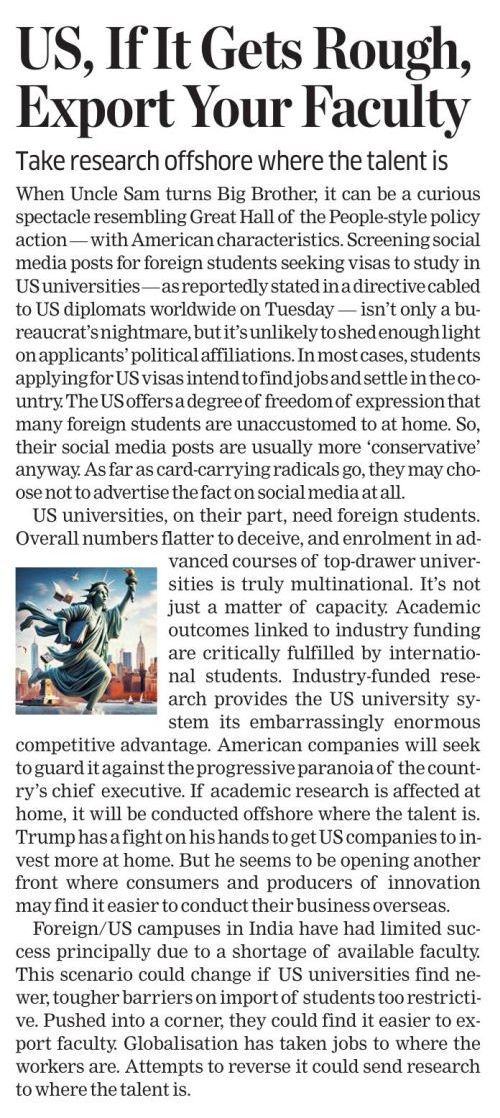
This has sparked outrage in the media all over the world, including India. In its article entitled Visiting students can’t hide social media accounts from Uncle Sam anymore, The Register called this a dangerous move. In its editorial entitled US, If It Gets Rough, Export Your Faculty, Economic Times whined that social profiling would be very onerous, ineffective, misleading, etc. In my opinion, these are terribly misguided.
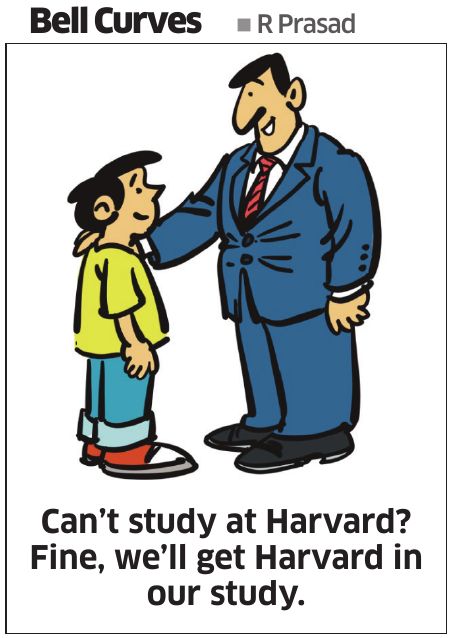
ET also also proposed that Harvard and other US universities should sidestep the new rules by exporting their faculty to India. I think that’s a harebrained idea.
Let me explain why.
1. Feasible
Social media sentiment analysis software automatically scans posts and provides valuable insights into users’ attitudes, political leanings, and other attributes that the US federal government agencies will now assess before granting visas to students. This technology is proven for over a decade.
Nowadays, you don’t even need costly sentiment analysis software. A free tool like Grok provides profile summaries with similar information on X fka Twitter.

Therefore, contrary to ET’s claim, screening social network posts of foreign students will not be a “bureaucratic nightmare” and it will, in fact, shed a lot of light on applicants’ political affiliations.
2. Accurate
Users’ posts about their home countries might be conservative, especially when those countries allow limited freedom of speech. However, there is no reason to believe their posts about USA will be equally restrained. If anything, people often feel emboldened to rant candidly on foreign countries from within their own, assuming they are beyond the jurisdiction of the country they are criticizing. That perception may change once they are on U.S. soil, but until then, they are likely to post freely.
3. Radical
 Social media is full of card-carrying radicals who openly advertise their affiliations because it gives them a bully pulpit to spread their ideologies and, in some cases, raise funds via Go Fund Me and other online crowdsourced donation platforms. So, contrary to ET’s contention, social media vetting will help the State Department to prevent radicals from entering USA.
4. Not Entitled
Student visa is not a birthright of the applicants. The said federal agencies of USA don’t need to provide any justification for rejecting visa applications to either students or universities, so even if their screening processes and technologies work less than perfectly, it’s no skin off the government’s back.
5. University > Faculty & Students
 A university is much more than just faculty and students. At the peak of MOOC mania, they predicted that Massive Open Online Courses will kill physical universities. Nothing like that happened – completion rate of online courses is stuck at a paltry 4%. This shows that there are many other aspects to the university experience than just faculty and students.
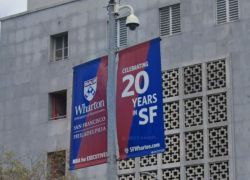
Transplanting faculty to India will not recreate the same environment as the original campus. We see this even within USA: According to my ex-classmate and an alumnus of Wharton Business School who would like to remain unnamed, the San Francisco outpost of Wharton does not have the same cachet as the original Wharton campus in Philadelphia due to differences in program rigor, networking opportunities, and other locale-specific factors.
Likewise, a Harvard in Mumbai will not carry the same prestige as the original Harvard University in Cambridge, Massachusetts, USA.
For all the media outrage on vetting social media profiles of student visa applicants, I think the new initiative is a nothingburger. In any case, El Reg reports that students have started deleting their sensitive posts before applying for US visas.
PS: In case the op-ed referenced above is not available online or is paywalled, cf. following exhibit.
PPS: Last year, I read a book called HELIX OF COLE by Michael Maxwell. Set in San Francisco, this book had many details about the topography of the city. As I usually do whenever I come across anything interesting about a place, I opened Google Maps and checked out the Street View of the specific locale described in the book. On lamp posts in the said street, I saw ad signs of Wharton San Francisco. Although I’ve known about the flagship campus of Wharton in Philadelphia for decades, I stumbled on to its SFO campus only a year ago.