 Rufus is Amazon’s Generative AI chatbot. Whenever you have a question about a product you’re browing on the Amazon website or app, you can click the Rufus button and ask away. You can converse with Rufus in normal language (Natural Language) just as you’d with ChatGPT.
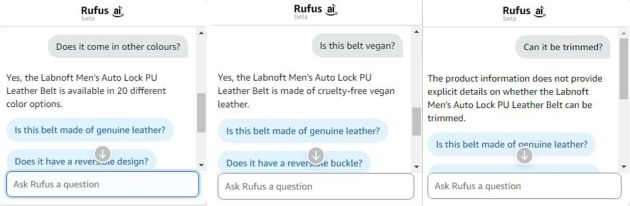
Around six months ago, I was in the market for a belt. I searched for “leather belt” on Amazon website, clicked through the first result and landed on the product page of a belt. I wasn’t sure if it’d fit some of my pants with narrow hoops that normal width belts don’t go through. So I asked Rufus. It said the belt’s width was 28mm and should fit the narrowest of hoops that are wider than 30mm. This was a very helpful answer and helped me to make up my mind.
Cue to a recent experience.
I wanted to buy bluetooth earbuds last month. I’d bought a pair three years ago and I was happy with its performance. I went to my order history page on Amazon website, typed the name of this brand and hit enter. Sure enough, Amazon surfaced the product I’d bought in 2022. But it said the product was not available now. Instead, it suggested two alternatives. Let me call them Acme1 and Acme2. I clicked the Acme1 link and landed on its product page. It was slightly costlier than Acme2. Normally, at this point in the shopping journey, I’d click the Compare button to see the differences between the two belt models before deciding whether it was worth paying a premium for Acme1. This time, I didn’t see any Compare button.
So I hit the Rufus button and asked for a comparison of the two models.
What are the differences between Acme1 and Acme2 models of bluetooth earbuds?
Rufus replied:
The product information does not provide explicit details on Acme2…
I got the feeling that Rufus was indexed on the specifications of Acme1, the product on the current page, and could not access the specifications of Acme2, which was on a different product page.
I gave up with Rufus and asked the same question to ChatGPT.
ChatGPT listed various differences. It turned out that Acme2 was slightly better than Acme1 even though it was cheaper. (Seems like Acme1 was old stock with a higher inventory cost, ergo it had a higher selling price even though it was inferior).
I went ahead and placed the order for Acme2 earbuds.
This incident reminded me of my past experiences with many single site search products.
- Google CSE: Google is great at searching the entire world wide web but sucks at single site search, as I highlighted in Why Is It So Hard To Search Inside A Single Website Compared To The Entire WWW?. Not surprisingly, Google’s single site search products Google Search Appliance and Google Custom Search Engine have proved to be damp squibs. Also, as far as I know, Google has not yet launched an enterprise AI search product à la Glean.
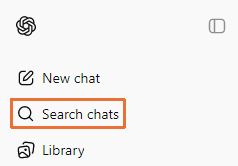 ChatGPT Search chats: In the last three years since ChatGPT was launched, I’ve had hundreds of convos with the chatbot. To look up a past Q&A, I click the Search chats link. Until recently, whenever I did that, ChatGPT used to crash. Even hitting the back arrow on the browser wouldn’t restore my session. I’d have to click the ChatGPT bookmark to reopen the site. While this feature started working a couple of months ago, it’s extremely slow in delivering past chat entries. Besides, after the recent update, the results page (“modal”) fails to center on my screen.
Based on these two datapoints, I’m jumping to the conclusion that single site AI / Small Language Model is destined for failure.
This is not to discount Rufus’s value.
I already explained above how I found Rufus useful in my shopping journey. I’m not alone. According to Amazon via Fortune magazine, 250 million shoppers have used its AI shopping assistant Rufus this year and it’s so effective that it’s on pace to pull in an extra $10 billion in incremental sales.
However I do wonder if there’s something about the basic design / architecture of search engines and AI assistants that makes them excel on multiple diverse datasets but flop on one uniform dataset.
While on the subject of AI and shopping, OpenAI recently announced partnerships with retailers to facilitate shopping directly from its chatbox. Some of the retail partners include Big Basket, Etsy, and Target.
Target Corporation announced that consumers will be able to discover and shop Target right inside ChatGPT – Target PR.
The operative term is “right inside ChatGPT”. It means consumers can discover, choose, buy and pay for Target products without leaving ChatGPT.
Let me call this new style of shopping “Chat Shopping“.
“Users can shop directly from BigBasket via ChatGPT … without leaving the platform”.
Well, isn’t that how every ecommerce platform works?
I’m guessing it means the opposite: “Users can shop directly from ChatGPT via BigBasket… without leaving ChatGPT”. pic.twitter.com/rUzV76cD3Q— SKR (@s_ketharaman) November 30, 2025
If OpenAI takes a slice of the revenue as rake, that would be an additional source of revenue for the company.
As an aside, when asked in 2019 how OpenAI would make money, its founder Sam Altman had said:
We have never made revenues. We have no plans to make revenues. Once we build our superintelligent AI, we will ask it how to make revenues… You can laugh if you want.
I wonder if Sam Altman got the idea for Chat Shopping from ChatGPT!
Chat Shopping joins a long list of extant shopping styles such as:
- Mail Order Telephone Order (MOTO) aka Catalog Commerce: Discover and select from shopping catalog, buy and pay via mail-in coupon or telephone call.
- Research Online, Buy Offline (ROBO): Discover and select on website or app, buy and pay at brick-and-mortar store.
- Showrooming: Discover and select at brick-and-mortar store, buy and pay at website or app via smartphone (before leaving the store).
- Buy Online Pick up In Store (BOPIS): Discover, select, buy and pay on website or app and collect the ordered goods from the store – typically at the curb or a customer service counter at the entrance of the store i.e. without entering the store.
- Social Commerce: Discover, select, buy and pay on social media apps or websites without ever visiting the ecommerce / D2C website or app.
- Buy Online, Return In Store (BORIS). This is only a return style.
The end-to-end purchase journey in all of the above shopping styles (except Social Commerce) straddles multiple channels aka Omnichannel Shopping.