 Soon after I published Witness Swears To Tell “The Whole Truth” – But Can He?, I came across a great example for the central theme of the post.
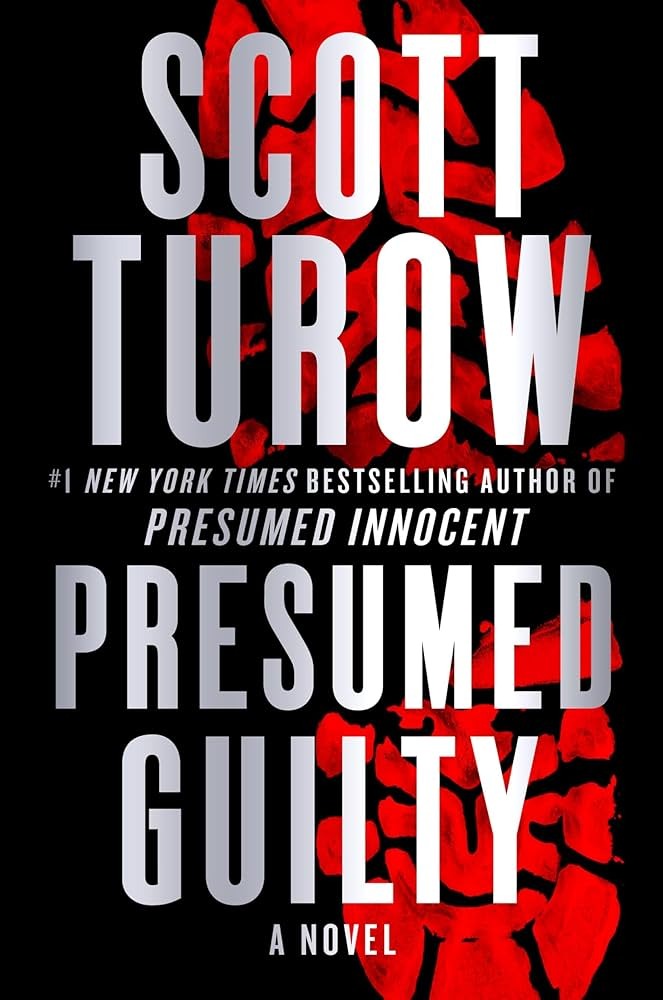
This was in Scott Turow’s latest novel PRESUMED GUILTY.
Aaron Housley, resident of Skageon County, is arrested for homicide and obstruction of justice. The first crime happens in Skageon County and the second one, in Marenago County, which is two hours away (see footnote 1).
The trial takes place in Marenago County, where the Prosecutor is Hiram Jackdorp (see footnote 2). Defence Attorney is Turow’s recurring protagonist Rusty Sabich. One of the witnesses for prosecution is Cassity Benisch. Like the defendant, Rusty and Cassity also live in Skageon County.
Rusty conducts his pre-trial interviews with Cassity face-to-face. On the other hand, Jackdorp does not want to drive for two hours, so he uses Zoom to conduct his pre-trial interviews with Cassity remotely. Following the best practice for this medium, Jackdorp goes through a crisp checklist whereas Rusty conducts open-ended interviews.
When she’s put on the stand by Jackdorp, Cassity answers all questions truthfully.
On the cross, Rusty covers new grounds based on what Cassity told her during his pre-trial interviews with her (see footnote 2). In response Cassity reveals new details that are incriminating to the prosecution.
After Rusty finishes his cross, Jackdorp asks Cassity on the redirect why she didn’t tell him the additional details during his pre-trial interviews with her.
She says, he didn’t ask!
tl;dr: Rusty injected new context in his cross and elicited additional facts from Cassity. But, they were not warranted within the context covered by Jackdorp, so, by not mentioning them during the direct, Cassity did not commit perjury. Despite not telling the whole truth from the perspective of a layperson, Cassity had still honored her oath to say the truth, the whole truth and nothing but the truth. The culprit is the questions asked or not asked by the attorneys.
I shared my post with a couple of lawyers in my circle.
One of them reverted back with some interesting feedback.
There are typically three stages in a trial:
- Interrogation – when the investigating officer is meeting a potential witness for the first time. The questioning could be open-ended e.g. “What do you know about this incident”? This sets the stage for the “whole truth” to come out.
- Direct – once the prosecution has decided their story, they basically want the witness to stick to it. Questions are directed accordingly. They don’t necessarily seek the whole truth.
- Cross examination – when the defence is trying poke holes in the prosecution theory, they too direct their questions accordingly. They also don’t necessarily seek the whole truth.
The way courtroom procedure is supposed to work in theory, lawyers shape the questions, the judge controls the flow and it’s the job of the overall process to ensure that all questions required to cover the full context are asked, and the whole truth elicited.
However, in practice, people have their agenda. I’m not surprised that prosecution decides its story in advance and shapes its questions to only bring out the truth in support of its story. (This is not very dissimilar to how IT program managers operate!). In fact, going by the numerous courtroom dramas I’ve read and watched, the go-to way adopted by the defence to create “reasonable doubt” in the minds of jury and obtain an acquittal is to argue that the prosecution had tunnel vision and failed to explore any other suspects than their client.
Old American rhyme about how law / justice apply differently for poor v. rich:
=====
The law locks up the man or woman
Who steals the goose from off the common,
But leaves the greater villains loose
Who steal the common from the goose.
===== https://t.co/P1oDyn6DdE.— SKR (@s_ketharaman) May 21, 2024
On a side note, I learned that the oath in Hindi is
Main shapat leta hun, jo bhi kahunga sach kahunga, sach ke siwa kuch nahin kahunga i.e. I swear that I will tell the truth and nothing but the truth.
As you can see, there’s no commitment to poora sach / whole truth.
However, according to my lawyer contact, the actual oath in the Oaths Act has the phrase sampoorna satya, just that he has never heard reference to whole truth in any actual courtroom trials that he has attended.
I’ll try and compile the language of the oath in other languages and post them in a follow-on post. It will be interesting to see whether they contain the reference to “whole truth” in theory and / or practice. Watch this space!
FOOTNOTE(S):
- Both counties are fictitious. As Scott Turow says in the acknowledgements section at the end of the book: “While I am always happy hear from you…, there is no need to burden yourself with messages telling me that you can’t make sense of the supposed location of Skageon or Marenago Counties. This is solidly – but only – within the peaceful confines of my imagination”. While on the subject, I’ve strong reason to believe that, contrary to the popular narrative among Turow fans, Kindle County Is *Not* Chicago.
- At first blush, these sound like anomalies in courtroom procedures but Turow explains why the judge allowed them in this specific case. Since they’re too technical, I’ve skipped them.